


Hello World
Every time I sit down with a new client who wants to start a blog, I can feel the tension rise as they begin to explore their desire to say something yet don't know how to start. They're stuck on the same question I've heard for more than a decade: What do I blog about first?
I've been writing blog posts about web design and development for over twelve years now, something north of a hundred posts, and if there's one pattern I see again and again, it's this: people treat their first blog post like a ceremonial event; a grand opening; a defining statement that must perfectly capture who they are, what they do, and why everyone should care. Let me save you some stress. Your first blog post doesn't need to be any of that. In fact, thinking that it does is the fastest way to never publish anything at all.
Your First Post Is Not a Grand Opening
A lot of would-be bloggers appear to approach their opening post as if it were the first page of a novel. Something that must hook, dazzle and establish a tone that will echo forever. Others think of it like the overture to an opera or a monologue that opens a play - carefully composed, weighty, definitive and encapsulating the whole. In reality, a blog shares many similarities with the structure of a podcast.
Blogs are pegged-out on a timeline and it's easy to assume that this means that blog posts are linear. A blog is a habit, not a single performance. A blog is a long-running conversation, a stream of consciousness to which people subscribe. No-one expects perfection in the opening sentence, and no-one is judging your entire body of work by your first attempt. Treating your first post as if it should be a masterpiece just adds pressure without adding value. The best blogs I've subscribed-to capture the zeitgeist or explore the questions which help me figure-out things for myself. So start with something simple, practical, open and honest.
A Website Has No Page One [SWIDT]
One of my blog posts challenges the idea that your blog has a strict starting point, like a book. On the web, there is no page one. People don't experience your site in a neat, linear order.
The home page is often treated as the beginning but in practice it's more like a hotel lobby.People land on the home page when they're unsure what they're looking for, not because it's the natural starting point of their story. Many visitors will arrive directly on a blog post from a search engine, a link, or a recommendation, never seeing your first post at all. That means your opening article doesn't carry the burden you think it does. It's just one doorway among many.
Your Blog Is Allowed to Think-Out-Loud
So, your blog does not have to say everything right away. You don't need to compress your entire philosophy, business model, or personal journey into a single post. A blog works best when it evolves. Early posts can be exploratory. Posts can be planned and scheduled and synchronised with a marketing calendar or they can be spontaneous (just like this one) circling-around an idea, testing-language and can slowly develop themes over time. Thinking-out-loud isn't a weakness it's a feature of the blog medium. Readers who subscribe and stick-around often enjoy watching clarity emerge through writing, buying-into the narrative and rather than consuming polished conclusions.
Pressure Is the Real Blocker
When clients tell me they're struggling to write their first post, what they usually mean is that they're afraid of getting it wrong. They imagine a large, invisible audience waiting to judge every word.
Here's the truth: you will not have a large audience on day one. Or day ten. Or even day fifty. And that's a gift, not a problem.Early obscurity gives you space to experiment, to find your voice and to make mistakes quietly. Writing under the assumption that thousands of people are watching is a recipe for paralysis.
Writing Is a Skill You Build by Publishing
No-one writes their best work before they've written their worst work. Blogging is a practice, not a performance. Each post teaches you something about clarity, structure, and what you actually enjoy writing about. Your first blog post isn't meant to be impressive, it's meant to exist. Publishing your first blog post flips a mental switch. You move from being someone who plans to blog to a blogger - someone who blogs. That shift is far more important than the specific words you choose.
Start Where You Are, Not Where You Think You Should Be
Many people feel their first post must explain who they are and justify why they deserve attention. In reality, readers are usually more interested in something concrete: a problem you've solved, a lesson you've learned, or a question you're currently wrestling with. You don't need credentials to write usefully. You need perspective. Writing from where you are right now (rather than where you think an expert should be) often produces more relatable and honest content.
Consistency Beats a Perfect Beginning
My first blog was entitled Cobblers' Children's Shoes and was published to coincide with the relaunch of our new website. What mattered wasn't that I nailed the opening but that I continued writing the second, third and fiftieth posts. Blogs that succeed are rarely the ones with the most elegant introductions. They're the ones that strike a chord and that I'm able to link-back-to from the commercial pages of my website; in a word, those with relevance.
Give Yourself Permission to Be Incomplete
Your first blog post doesn't have to wrap things up neatly. It can leave loose ends. It can raise more questions than it answers. In fact, that's often ideal. Those loose ends become future posts, future refinements, and future insights. Think of your blog as a workspace, not a display case. A place where ideas are assembled in public, not unveiled fully formed.
 Cobblers' Children's Shoes - my first blog post
When developers reference Hello World we're not implying completion or something definitive, we're talking about returning the smallest possible proof that a system works; that the script runs, the function is complete and that nothing more is expected of what's been coded so far. The value of the Hello World text message is entirely in the fact that it has been brought into existence.
What makes Hello World such a powerful metaphor for a first blog post is that it merely exists and signals a start. Its existence proves that you can blog (to write publish) and are ready to move-on to the next post. Once published, you'll have crossed an important line, from preparation to practice.
In blogging, as in development, momentum matters more than ceremony. A Hello World post gives you permission to be imperfect while still making progress. It's a signal to yourself, more than anyone else, that the tooling works, the fear didn't win, and the process has begun.
Everything that comes after benefits from that simple act of starting. You don't need fireworks. You don't need a manifesto. You just need to say hello and then keep talking.
Sub@omic Limited
Old Batford Mill, Lower Luton Road,
Harpenden Hertfordshire AL5 5BZ
t: 07970 029025 e: sub@omic.ltd
w3w: envy.tone.under
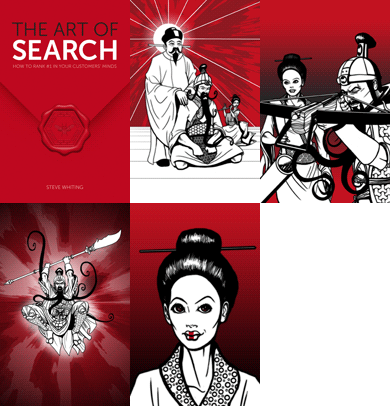
The Art of Search
Download Sub@omic's heavyweight SEO management strategy based on "The Art of War", a 6th Century BC Chinese text on warfare. Discover how listening to the Customer will secure you a #1 Google ranking.
SEO Read Buyterms & conditions privacy & cookies © 2026 Sub@omic Limited